For aluminium windows, doors, and architectural profiles, powder coating is usually the better choice when you need more colour options, stronger design flexibility, and premium architectural finishes, while anodizing remains useful when a natural metallic appearance and specific technical performance are more important.
Introduction
Choosing the right surface treatment for aluminium profiles is not just a finishing decision. It affects durability, maintenance, colour life, brand image, long-term value, and even how a building is perceived by clients and visitors. For builders, architects, fabricators, and homeowners, the right coating can make a major difference in the final project outcome.
India’s architectural aluminium market continues to grow, and customers increasingly expect finishes that are both attractive and durable. That is why it is important to understand the real difference between powder coating and anodizing before selecting a supplier. A well-informed choice can improve the final appearance of the project and reduce long-term maintenance issues.
For many modern buildings, aluminium is chosen because it is lightweight, durable, and visually clean. But aluminium by itself is only part of the story. The surface finish determines how well the profile performs in sunlight, rain, dust, humidity, and polluted urban environments. That is where the decision between powder coating and anodizing becomes important.
What Is Powder Coating?
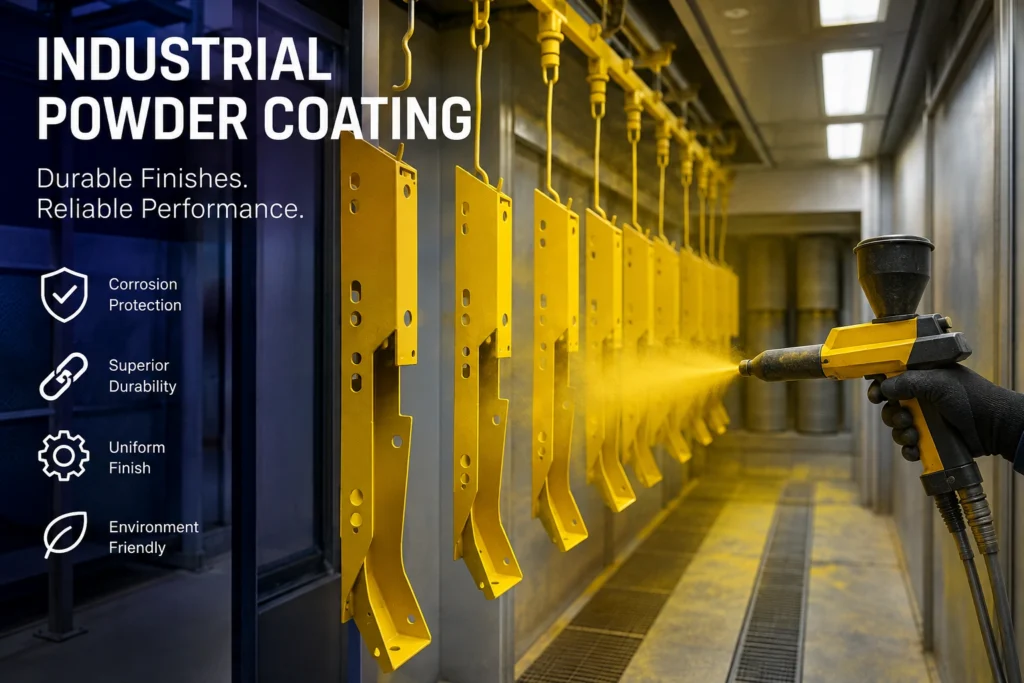
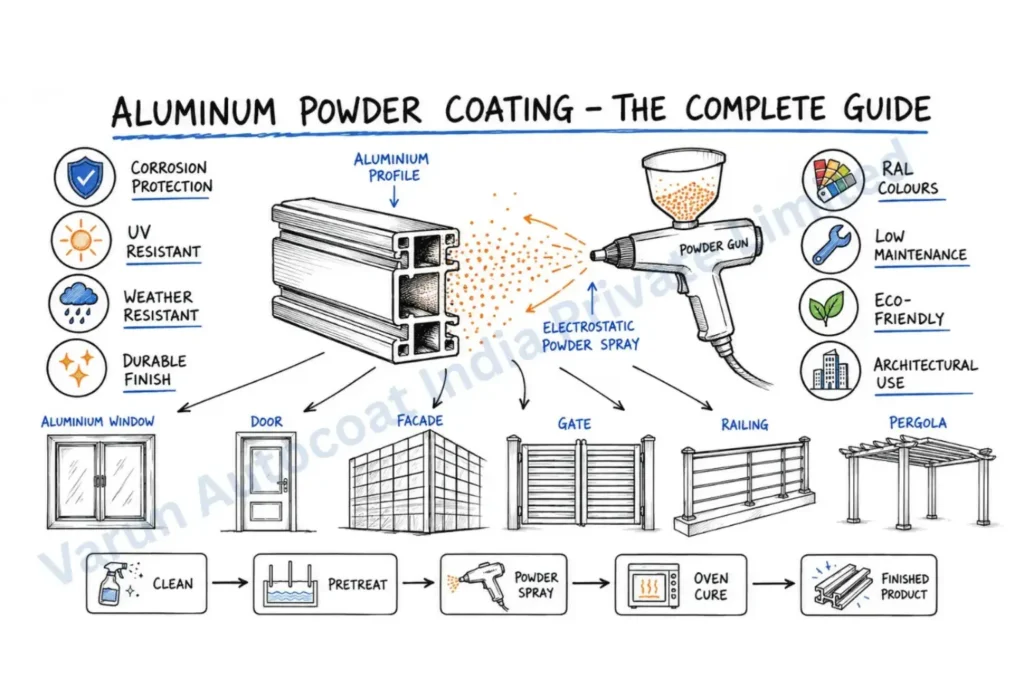
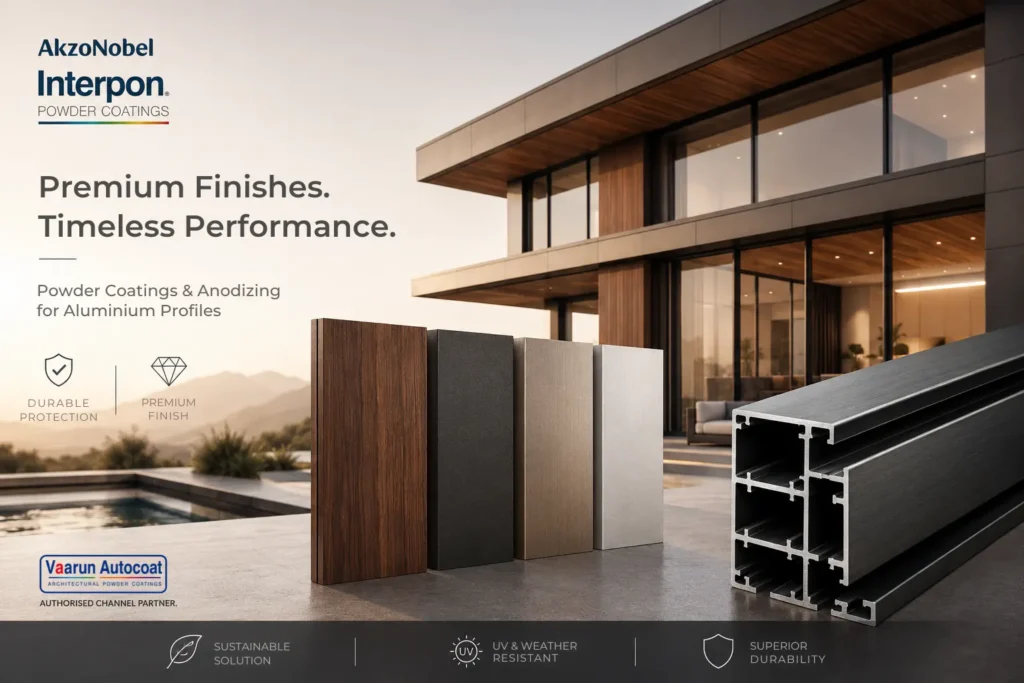
Powder coating is a dry finishing process in which charged powder particles are sprayed onto a prepared aluminium surface and then cured under heat. AkzoNobel’s Interpon powder coatings are designed to deliver durable, attractive, and sustainable finishes for metal surfaces. The result is a uniform coating that looks professional and performs well in architectural use.
The process usually includes pre-treatment, powder application, and curing. A good pre-treatment stage is essential because it helps the coating bond properly and improves long-term performance. In architectural applications, this matters even more because the coating must handle sunlight, weather, pollution, and daily wear.
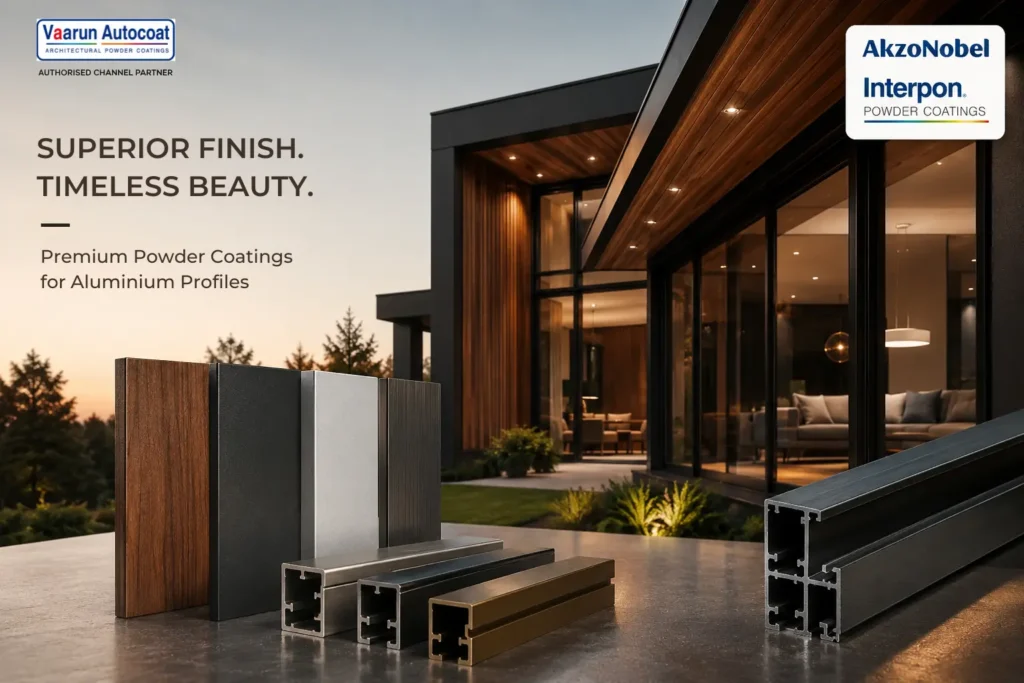
Powder coating is widely used because it gives designers and customers more freedom. It can be finished in matte, gloss, metallic, textured, or special-effect looks. This makes it ideal for projects where appearance is a major part of the design language. It also supports repeat consistency, which is important when multiple windows, doors, or facade panels must match.
Another important advantage is sustainability. AkzoNobel positions its powder coating business as a sustainable solution for protecting a wide variety of metal surfaces, and it highlights that powder coatings contain no volatile organic compounds and have a small carbon footprint. That makes powder coating attractive for customers who are thinking about both performance and environmental responsibility.
What Is Anodizing?
Anodizing is an electrochemical process that creates a protective oxide layer on aluminium. Unlike powder coating, anodizing becomes part of the metal surface itself, which is why it is often selected for a natural metallic appearance. The process changes the surface of the aluminium rather than adding a separate coating layer.
Anodizing is useful in applications where the metallic look is important or where a thin, hard surface layer is preferred. It is often chosen when the project calls for a clean industrial appearance, understated elegance, or a more technical finish. Because the layer is integrated into the aluminium, the look is usually more restrained than powder coating.
However, the finish options are more limited than powder coating, especially when a project needs a strong decorative or branded appearance. That is why anodizing is often best suited to specific design goals rather than broad architectural flexibility. It remains a strong option in the right context, but it does not offer the same range of visual styling as powder coating.
Comparison Table
Parameter | Powder Coating | Anodizing |
Appearance | Wide range of colours and textures | Natural metallic look |
Colour options | Many options | Limited options |
Maintenance | Low | Low |
Design flexibility | High | Moderate |
Surface look | Decorative and premium | Technical and metallic |
Best use | Architectural profiles, facades, windows, doors | Premium metallic finishes, specific technical needs |
The table shows why the two finishes serve different project goals. Powder coating is stronger when visual variety and design flexibility matter. Anodizing is stronger when the objective is a natural aluminium look with a technical finish.
When to Choose Powder Coating
Powder coating is the better choice when the project needs colour flexibility, premium aesthetics, and architectural consistency. It is especially strong for windows, doors, facades, screens, and decorative aluminium profiles. These are the kinds of applications where the surface finish becomes part of the building’s identity.
It is also a practical option when the client wants a modern finish that can be matched to building design, brand identity, or interior-exterior coordination. Many architects prefer powder coating because it allows them to coordinate colours across frames, panels, railings, and other visible metal elements. That level of consistency is difficult to achieve with more limited finish systems.
If sustainability and low-emission finishing matter, powder coating is also a strong option because powder coating systems are widely promoted as durable and sustainable solutions. AkzoNobel’s powder coatings are designed to support that requirement while also delivering a high-end finish. This is especially relevant for commercial projects, premium residences, and large architectural developments.
Powder coating is also usually preferred when the client wants a polished, branded, or design-led result. Since the finish can be selected in many shades and textures, it is easier to create a premium appearance. That flexibility is one of the biggest reasons it remains such a popular choice in modern construction.
When to Choose Anodizing
Anodizing is a good option when the client wants the natural look of aluminium and a technical finish that becomes part of the metal surface. It can be especially useful for projects where a metallic appearance is preferred over painted colour. In such cases, the visual effect is often cleaner, subtler, and more restrained.
It may also be selected for certain applications where a thinner coating layer is desirable. In such cases, anodizing can deliver a clean and understated visual effect. It is often associated with a more industrial or architectural-metal look, which can be the right choice for specific design themes.
Anodizing may also work well when the project is focused on simplicity rather than visual variety. If the client is not asking for a broad colour range and instead wants a refined metallic appearance, anodizing can be the better fit. The key is understanding the design intent before deciding on the finishing process.
Why AkzoNobel Interpon Matters
AkzoNobel’s Interpon powder coatings are positioned as high-performance and sustainable coating solutions for metal surfaces. This is important for architectural aluminium because clients want finishes that perform well and also look premium for many years. Interpon is also associated with consistency and brand trust, which matters in premium projects.
AkzoNobel states that its powder coatings are a sustainable option with no VOCs and a small carbon footprint. That strengthens the brand’s relevance in projects where both appearance and environmental responsibility matter. For architects and specifiers, that combination can be a major advantage.
Interpon also adds confidence because it comes from a globally recognized coating brand. When a company uses a major brand system, customers often feel more secure about product quality, finish performance, and application standards. That trust can have a direct effect on customer satisfaction and repeat business.
Why Choose Varun Autocoat
Varun Autocoat India Private Limited is an authorized channel partner and wholesaler of industrial powder coating materials in Greater Noida, Uttar Pradesh. We also provide professional powder coating application services in Sikandrabad, Uttar Pradesh, making us a complete solution provider for clients who need both premium supply and expert application support.
This business structure is important because it gives clients a practical and efficient service model. Greater Noida functions as the wholesale and supply base, while Sikandrabad handles application work. That means customers can get the right materials and the right finishing execution through one connected business.
For aluminium profile projects, this matters because the finish must be technically correct, visually consistent, and delivered on time. A company that offers both powder coating and anodizing can recommend the right solution instead of forcing one finish for every project. That approach gives clients better results and more confidence in the final outcome.
It also helps builders and fabricators work with a partner who understands both the supply side and the application side of the business. That reduces confusion, improves communication, and helps ensure the coating matches the needs of the project. In competitive architectural work, that can become a real advantage.
FAQs.
Powder coating is usually better when colour choice and architectural appearance are important.
It depends on the project, but powder coating offers more premium design flexibility.
Yes, especially when a natural metallic look is required.
Yes, it is widely used in architectural aluminium applications.
Yes, both powder coating and anodizing are available.
Yes, Interpon is AkzoNobel’s powder coatings brand.
For most architectural aluminium projects, powder coating is the better all-round solution. For special metallic appearances and specific technical preferences, anodizing remains a valuable option. The best supplier is one that can offer both and guide the client honestly.
If your project needs strong visual appeal, wider colour choice, and long-term consistency, powder coating is usually the smarter selection. If the goal is a natural metallic look or a more technical surface finish, anodizing can be the right answer. In both cases, the quality of the supplier and applicator plays a major role in the final result.
Varun Autocoat adds value by combining Greater Noida supply and wholesale support with Sikandrabad application services, which gives clients a more complete and practical service experience.
Contact Varun Autocoat
For quotation and technical consultation, contact Varun Autocoat, Greater Noida.